

Hello! Buy my book! It is a subversive Irish Mythological Retelling that won the Fantasy Book of the Year, was called “A mastery of mythology” by Independent Book Review, and won many other accolades like Manda Scott calling it, “An outstanding, beautiful, and essential book,” and Chelita Zainey, the Māori storyteller and mokopuna of the Waitaha nation, called it, “Magnificent! A stirring, a remembering of ancient bones, without a doubt divine!”
Be a good person and buy it directly, or, if location prohibits, be a decent person and buy the Kindle version. I’m not here to judge. It is the 1st book in a series and Book 2 is already out and Book 3 comes out this Autumn! So get with it.
If you enjoy this, please share it by forwarding this email, sharing it on your social media (if you still have one), or sharing it on Substack.
Monthly subscriptions are $6.75. Yearly subscriptions are $49, and Founding subscriptions are $140. These subscriptions support my writing and this space. It may be a cup of coffee for you, but it is the nourishment that keeps us alive, and we are so very thankful!
You are receiving this because you have subscribed to Daniel Ffrith Griffith’s, or Robinia Institute’s, or The Wildland’s email newsletter or Substack, which are, today, one and the same. Welcome.
I do not use artificial intelligence for any aspects of my writing.
Also: Buy my book! It is a subversive Irish Mythological Retelling that won the Fantasy Book of the Year, was called “A mastery of mythology” by Independent Book Review, and won many other accolades. Be a good person and buy it directly.
Introduction
This is an unbridled letter.1
This is an unbridled letter, composed while scrubbing someone else’s hair from my hands, the hard crusted lime steeping into my blood from a masonry of cracks and tears in the neglected fabric and webby wedge of skin that struggles to fasten my fingers together. My heart holds it close, this silence of hairs, the congealed mat of them too, the brown-red keratinous threads unraveling after innumerable soaks and scuds, the pollen they once carried, transporting once seeds and flowery-notes from this field to that, but today from that to this.
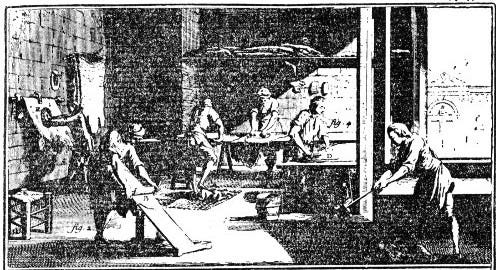
This is an unbridled letter. It is a text borne from a guilt too strong and too long neglected to hold in any sound way. A letter and string of letters stitched to the soundtrack of the bench plane’s pitched swoosh, the hewing axe’s cavernous thud, the tannery’s moist sloop or scuffing slosh, the bindery’s bone-folding swish or thready sow crackling through gluey cotton paper, or the keyboard’s mechanical rap, empty as it is.
This is an unbridled letter. A bacterial analogue, a miracle of magikcal mutations that look like silence, a letter about the first flutterings to flourish behind a portrait of indomitable patience.
This is an unbridled letter, an adkenî2 screaming like cross-blown breath through bone, like a swîkwano,3 a singing-bone, that sacred instrument lighting the hearth and ceremony alike that, when pushed just so and tight against the lips and pitched to the side, lips doing it like this, catching that perfect angle, sends a deep wind to slide and stumble over the warm bed where once only marrow flowed.
This is an unbridled letter. Which is also a marwonatus4: a threnody climbing the sacred fire of the long—ago people like a requiem skinning the dirge of machines to flay the poem of the dead with the knapped stone knives of the (re)living, a poem so much like remembrance, like a wertyâ5 opening to Sun and letting the dead walk free…
Wîrjânjâ skek dergo andom an askorno.6
Join in.
Ballad of Unbridled Kindness
This is the start of silence. broks-dîti, the dream—sleep or ceremony, the sacred quiet that the human spirit clad in clay so entirely depends.
A weird thing, silence. Its spirit—crumbs always left behind, the good medicine, just blood—waters for vampire lungs. But I am heaving for a bite, just a suckle is all this body needs. Teeth doing that thing like the whale, singing without sound, just humming waves in red waters…
Silence is the medicine of the long—sleep bear that sups with the stag under the snow covered and snoring-stones. Silence is a living mythology that modernity dismantled in view of progress, money, pride. It is a preposition ending the sentence, like a breath half breathed, like a breath that I need you to help me with.
Will you? Help me breathe?
There is a moment to the dawn that often wakes me. It stirs me not from sleep, that deep confine upon my cotton mat’s slumber, no, for I cannot sleep past the fifth hour anymore, but wakes me in that, “hello, dearest” sort of way that only Earth Mother may.
That tender breath that we often consider the brusû7 of the day. That white moment with her great gilded locks so much like the summer-splayed sepals of meadowsweet, that white island palace of concentric rings rising up Sun with a globe of song, majestic, kind, that gravitational spray of so many colors all at once. And that tan tunic, too, training behind, waving a sparkling stillness, that leggy silence inaudible to ears, that unseen syllabary that robes like a cow-skin coat in the cold night.
Dawn, her meadow-mottled fingers. Her fingers the goddess all in white. White, all the colors at once. Colors, the only song to sing up Sun.
wiḱpótis lengeti kwe sognâwos8.

It is this dawn that petrifies me, like the wide smile eternally etched in Elowyn’s9 face on the winter sled that scares me; like our youngest, just five, Sequoia, a fire-spirit with the fiery hair, scares me when she wraps the soft pulp of her skin tight-tight around my big boney fingers on long days like saying “It’s okay daddy, I got you.” Like Weymouth, our little man, who spends that gusty laugh when there is nothing left to say.
It is a strange thing to let go. A scary thing to hold forever in your hands, or heart. To sit in the silence. To be busy there too.
I have for thirteen years struggled with silence. Always talking about something, yelling, perhaps, at someone. Perhaps this struggle is why you are here, you heard me on some podcast saying crazy things. It is true though, Creator gave me the sight to see and I have seen too much.
But now, as the year 2026 considers her waking, the winter sleep—tent’s hearth spitting that mûko10, all barely embers now, our goddess Cailleach soon to crack her dark—water eyes and Imbolc fresh upon us, I have decided, really was pulled here kicking and screaming but “decided” will do, to plant roots into what I am calling A Ballad of Unbridled Kindness. Today is the beginning of a social silence, a dismissal of everything that makes me less human. The banalities of machines wurthering in the heights of someone else’s world.
Not mine not mine not mine not mine!
A year to focus on writing and developing this craft (I have three books in tow). A year to rebuild the family’s leather tannery. A year replanting our sacred harvest and home-scale butchery work. A year of hewing some logs, building a home too. And a year with a few other very large projects that are my secrets for now…
Every week or handful of weeks, depending, I will be on here writing about Silence with unbridled kindness. Sharing what She says, both Kindness and Silence, as I do big things smally, great things placidly, like wind over still waters, like breath in spring leaves, doing it like this because a silence with legs is the silence we … so … desperately … need. Like puddles that wait for you to come along and take part in their treasures, silence is waiting for me.
I just published a novel all about the idea of a “silence with legs.” Check it out! Or don’t…it’s your loss.
But, before we go, a story.
In 2013, I wrote a polemic history of the early American west that explored themes of indigenous genocide and the inevitable scrum of republican virtues with the fluidity of life all through the story of the woodsman, Daniel Boone. At the time, my manuscript was held as a definitive and worthy academic exploration of its subject and many Deans of History from many different graduate schools, from UCLA to Millikin to BYU all urged me to publish. The months that followed were a flurry of exciting queries with University Presses. I felt like an author…
That was until I was met with rejection—a substance well-known to authors, like the musky dinge of smoke or the dustiness of cold tea, but for me it was different. I was told by two different University Publishers that my book was good, entirely authoritative, and well-worthy of the papers for print. That was not the problem. But there was a problem: I had no credentials after my name and so all was a firm “no.”
I was just Ffrith.
Heart-broken, I strode forward and was accepted, while still a Junior in College, into a duel-enrollment graduate program where I would earn a Masters in History one year after receiving my undergraduate B.S. The summers would be hard and the winters even harder, but it would provide the white-tower-signed-papers my book needed.
That was until a life-long disease slithered in like a long—neck in the tall tangle of bracken lacing about my legs. In a matter of a month, I lost eighty pounds. Two months, twenty more pounds. At twenty-two years old, I weighed less than I did in the fifth grade. I spent the next years in hospitals, undergoing three major-major surgeries, lost the ability to walk, spent 6 months at the Cleveland Clinic learning how to do that part again, and so much more. I still to this day carry all of this with me, the blessing of “feeling everything,” but that is another topic for another letter.
Needless to say, I never went back to Graduate School. That book died with me.
But I learned something too, as all silence comes with a lag of legginess, a mouthful of medicine.
I did it. But the world man created said otherwise. I did it. But the world said no. Since then, I have self-published six books with shitty sales and great success. But this, I believe, is merely an arm of the Canon Wars of a generation past, when figures such as Allan Bloom or E.D. Hirsch argued that great novels and literature form a kind of inheritance, while others like Toni Morrison vied for stories less footed in the histories of exclusion, racism, and imperialism, and that lessening (or questioning) this inheritance is a moral imperative.
It is in the pasty bowels of these wars that modern (functional) illiteracy joined academic elitism, where aesthetic judgement taken up from the perspective of enlargement and encountering beauty or ugliness for its own sake became merely power analysis, and stories and literature and our histories were reimagined less as an engagement than evidence in an ideological courtroom where prevailing political commitments or social justices demanded seats in the jury—all of them.
Yes, I am saying that both Bloom and Morrison are the cause of illiterate elitism today, but not directly, of course. By arguing what makes literature? we all have thrown the entire apparatus away. Unintentionally. But there is no blame. When those who elites made into “others” revolt after long periods of parasitic prose (and more, of course), it is not the “others” that are at fault.
John Brown’s body will never be found not because it was made of clay but because politics are made of sand…
It is the intentional MFers that I content with. Those who say that history is written by professional historians. Those who say that thoughts are safest when held in white-towers. Those that say only good-good books are books and that good-bad books are not.11 This is why I will never commune with those who say “self-published books are not books,” for they, unlike Bloom and Morrison (one of my favorite authors, by the way) consciously engage in the Canon Wars destroying the fabric of our humanity—the purity and sensual beauty of story, the tales lapping the warm hearth like red-orange fingers of flame—those MFers throwing their hate-instilled comments like battle-hardened spears into jail cells and calling it a war…
Literature demands a lot from the reader. Once, storytelling and storylistening was taught from the perspective of an ego-less approach—come with curiosity, patience, a reverence for difficulty (like Morrison’s Song of Solomon so requires), and, most strongly, an opening for change, for being thrown wide and stretched by a new worldview, a new worldsense, a new way of being here as an Earthling (read Morrison’s Sula, only the first 10 pages, and you will see why being a white-man-reading-Morrison is hard). But that means closing up too. When you read Lonesome Dove and all of the (lovable) characters hate “red people” and wish only for their destruction and discredit the “black” ranch hands as secondary and unlearned peoples like this is just an assumed social ethic—learn from this, for it is true like you are true. But that doesn’t make the story right, it doesn’t make our history right either. It makes the story rightable—that is, capable of righting our ways, if we let it.
The problem, I think, isn’t Lonesome Dove or that Morrison’s Sula is hard for me to read, it is that readers either don’t read because something is racist or when they do read it, they defend it as their stalwart inheritance. Stories are meant to enlarge, I think—to grow empathy, hate, love, and all other worthy emotions. White-tower elitism spawned this great error, I think, for it pushed authors like Morrison in a corner, a corner that created a war, and a corner that created an illiterate people.
A quick note—one of my favorite books is Stephan Graham Jones’ Buffalo Hunter Hunter. Jones’ story is about a Pikuni vampire that runs about the early twentieth-century plains eating Napikwans, or white buffalo hunters. The story is not one-sided, but there is a heavy dose of “indigenous rage” on every page (“I am the worst nightmare America ever had, I am the Indian who cannot die,” for example. But Jones’ story brings a certain racial and social justice that gives someone like me, and of course many others, a sense of enlightenment. It is stretching, like a brain-tanned hide on the beam, making me more supple, more human.
When story is valued not for its capacity to enlarge but for its alignment with academic or elitist aesthetics, we all lose. We need Morrison and Jones, Homer and Dostoevsky too.
Just like dawn and her meadowsweet, we live in a world that says the morning begins sharply at 8 a.m. and is colored by clocks that go boom, emails that ding, tasks that need ticked; a world that contrives confusion as the aimed exhaustion and not the pure liquor of actual exhaustion derived from performing the good-medicine-work that you once dreamed of doing. The world condemns its contrived appliances to stand over and govern the puissance of application. Not man, no they supported me. They wrote letters.
No, it is the world of man that is too busy for success. Too busy for dawn and too busy, too, for the spirit of slow things. Seven years later, when querying another book, a Senior Editor in a large House told me that my book (Stagtine, which, after self-publishing it, won the Nautilus Book of the Year, a great and truly monumental award in the non-fiction space) had the ability to change the world and become a classic in the space/genre, only to turn me down because my Instagram following was poor.
But one cannot build a following on Instagram unless they are willing to make a job of it. A job that requires more attention than the good work of writing. On social media, we risk our autonomy, our agency as Earthlings. We become vulnerable to the deft persuasion of our puppet masters: algorithms or the leaders that elected them. We become a people shaped by platforms that are themselves shaped by AI and those generative shit’s billionaire belligerents.
The world of man expects us humans to be everything, when we are only a something, info-lunatics and never master craftspeople. Dawn asks for creatives. The world of man asks for consumers for capitalistic companies that see you as the hurdle to cross to get to the money.
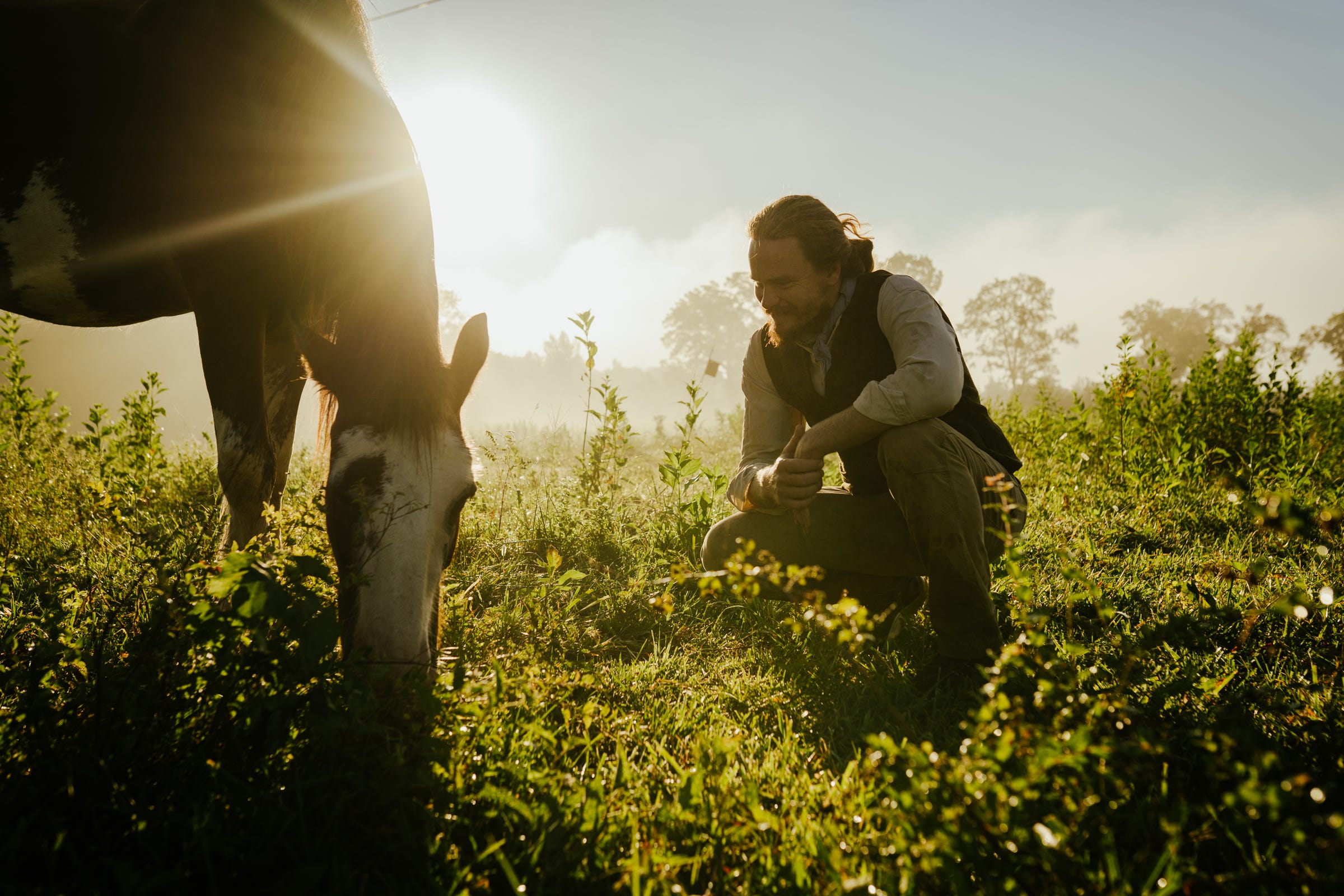
The world of man seeks connection to quell our ever-spreading plague of loneliness, as though connection will cure the human’s dependence on being witnessed, on being held. But we can’t hold even ourselves. We may view ourselves as lonely. But, in wandering here, leaving the world of man, we became alone, that is, able to be held. And when we become fearless we become whole and when we become whole we become wholly alone, because we become wholly ourselves and there, RIGHT THERE, I think is where we become hold-able.
This is the point of Ceremony. The good medicine days that are calling to us.
last year I published a novel all about the contrast between loneliness and being alone, a story swaddled by a subversive retelling of our ancient mythology. Check it out! Or don’t…it’s your loss. It won the Fantasy Book of the Year, just saying…
Like Earth Mother, dijarâ, is there waiting for us to understand this difference. To let go and be eternally scared by Elowyn’s feverish joy, Sequoia’s pulpy pillar of strength, Weymouth’s breathy smile, and Dawn’s many sweet meadows of color.
Join me in becoming un-busy.
Slán go fóill!
If you enjoy this, please share it by forwarding this email, sharing it on your social media (if you still have one), or sharing it on Substack.
Monthly subscriptions are $6.75. Yearly subscriptions are $49, and Founding subscriptions are $140. These subscriptions support my writing and this space. It may be a cup of coffee for you, but it is the nourishment that keeps up alive, and we are so very thankful!
Read Doireann Ní Ghríofa’s A Ghost in The Throat to understand this inspiration and plagiarism.
Mother Tongue. Proto Celtic, meaning “lineage (ancestral web weaving your life and place).” A similar word is used in the Indigenous culture of the Māori. “Whakapapa” is the core of traditional mātauranga Māori.”
Mother Tongue. Proto Celtic, meaning “bone-flute.”
Mother Tongue. Proto Celtic, “Truth moves red in our bones.”
Mother Tongue. Proto Celtic, meaning “Burial cairn” or “mound,” a cistvaen.
Mother Tongue. Proto Celtic, meaning “funeral poem.”
Mother Tongue. Proto Celtic word meaning “swelling or breast,” like a mother’s breast swelling with milk.
Grandmother Tongue. Proto Indo European word meaning “first father,” or “Sun Chief,” from the PIE *weyḱ-, meaning “household” or “central hearth” amended by the suffix *-pótis that forms a chiefly station, also “ancestor.” Translated, “Sun propelling rapidly and well-grown.”
Oldest daughter.
Mother Tongue. Proto Celtic, meaning “smoke from hearth-fire” or “that which the hearth-fire sends upward.” A woven from the Proto-Indo-European *(s)mewg-, meaning “smoke” and forms the modern English word for “smoke,” as well as the Old Armenian մուխ, also meaning “smoke.” We see the weave is carried into the more modern languages, such as Old Irish múch, meaning “smoke or vapor,” Cornish mog, meaning “fume or smoke,” and even potentiall in the Proto-Brythonic word moug, meaning “hearth.”
Read, George Orwell’s Essay, Good Bad Books
Thank you. You are among my favorite authors and you have stretched my mind and the possibilities of what can be every time I encounter your work. I enjoy your thoughtful conversations in your podcasts. You are a light in the dark, thank you.