

Hello! Buy my book! It is a subversive Irish Mythological Retelling that won the Fantasy Book of the Year, was called “A mastery of mythology” by Independent Book Review, and won many other accolades like Manda Scott calling it, “An outstanding, beautiful, and essential book,” and Chelita Zainey, the Māori storyteller and mokopuna of the Waitaha nation, called it, “Magnificent! A stirring, a remembering of ancient bones, without a doubt divine!”
Be a good person and buy it directly, or, if location prohibits, be a decent person and buy the Kindle version. I’m not here to judge. It is the 1st book in a series and Book 2 is already out and Book 3 comes out this Autumn! So get with it.
If you enjoy this, please share it by forwarding this email, sharing it on your social media (if you still have one), or sharing it on Substack.
Monthly subscriptions are $6.75. Yearly subscriptions are $49, and Founding subscriptions are $140. These subscriptions support my writing and this space. It may be a cup of coffee for you, but it is the nourishment that keeps us alive, and we are so very thankful!
You are receiving this because you have subscribed to Daniel Ffrith Griffith’s, or Robinia Institute’s, or The Wildland’s email newsletter or Substack, which are, today, one and the same. Welcome.
I do not use artificial intelligence for any aspects of my writing.
Also: Buy my book! It is a subversive Irish Mythological Retelling that won the Fantasy Book of the Year, was called “A mastery of mythology” by Independent Book Review, and won many other accolades. Be a good person and buy it directly.
Introduction
First, a prayer in the Mother Tongue: êsudiwegjê, klinu mewe ɸari-kaneyo, ɸarna mî nerto, or “Creator-weaver, hear my song of sorrow and seeking, give me strength.”
This is an unbridled letter.1
This is an unbridled letter, composed under the dawn of a ougros2 cloak, a tonakâ fighting back the dark and singing up the long yellow locks of yesterday’s hope and today’s souvenir.
This is an unbridled letter, an adkenî3 screaming like cross-blown breath through a bone flute. Swîkwano in the Mother Tongue—a singing-bone, a sacred instrument swelling like foam to run the heaving surf of the pale grey sea.
This is an unbridled letter. Which is also a marwonatus4: a death-song climbing the sacred fire like all orthodoxy is just kindling to the requiem of a dying civilization, skinning the dirge and flaying all vestments like the white gossamer gauze of moths.
Wîrjânjâ skek dergo andom an askorno.5
Join in.
Ballad of Unbridled Kindness
I am exploited. Indeed I am—we all are.
It is vogue to write about such things, especially here, vogue to complain about AI and the rise and fall of human decency, the abject loss of higher virtues, values too, as if society and its politic ever had a grip on morality. Until Plato, the Greeks wrote about pre-Greek Mycenae; until Augustus Caesar’s Virgil, the Romans prized pre-Empire peoples, from Livy to Tacitus. Humans, bards (seanchaí) unspared, most often sing by looking behind, seeking the wilds of our past for answers.
We never like our own times…and this has everything to do with exploit.
But first, there is a difference between exploit and entropy. Entropy is the gradual fall, thanks to energy loss, into disorder. But disorder is order beyond form, I think, although our modern minds want it to be something else, something savage, wooded, and unenlightened—uncivil. Disorder is so unpolitic.
But the relationship between disorder and order is the immortal grapple of the sexes, the yin-yang, the feminine and masculine carved perfectly into one another and eating like lovers lost in lush summer grasses. Our distaste for disorder is our distaste for ourselves, this patriarchy seeking order, structure, deterministic dominance that cannot right itself without killing itself…and so we hate it, ourself and the itself created by man.
Disorder is order seeking form and it is form seeking primordial chaos, man seeking woman, light seeking the dark. First Father Sun and First Mother Moon. Why? Well, that is simple: rebirth is fun. We know this is true from our bowels to our brains, from our taints to our temples.
In 1986, the mathematician Chris Langton theorized what our bellies already knew: that order emerges from chaos. This view ruptured mathematicians and anthropologists alike, at the time. The history of the human mind and the evolution of nature herself tells us that consciousness deepens over time (think Hobbes or Locke’s heartless and wrong Enlightened anthropology wherein the State of Nature always yields to the State of Civil Society) and evolutionary adaptation heightens only within generations. Order, our masters tell us, is the product of reflection, purpose, and choice.6 Order requires control.
But Langton questioned this notion. If order is only a product of choice, how do we account for life’s emergence or the peculiarity of particular thoughts or the energy escaping Sun? What if order and its complex yet patterned realities are actually an emergent artifact and womb—son of Chaos, a remnant of Creation’s origin itself?
Utilizing the universal Touring machine, an early computer, Langton developed a mathematical theorem that tested this hypothesis. What he found changed everything, or really told us what we already know. His theorem begins with complete numerical and logical chaos: it does and undoes, it goes left and then right, it grows and ungrows nearly simultaneously. But given time, it always finds order—perfect mathematical patterns that exist in infinitude. What begins in chaos emerges with time into the straight lines of our lives, Langton demonstrates.
Entropy is life’s wet slap and tangle. Exploit is life’s gift.
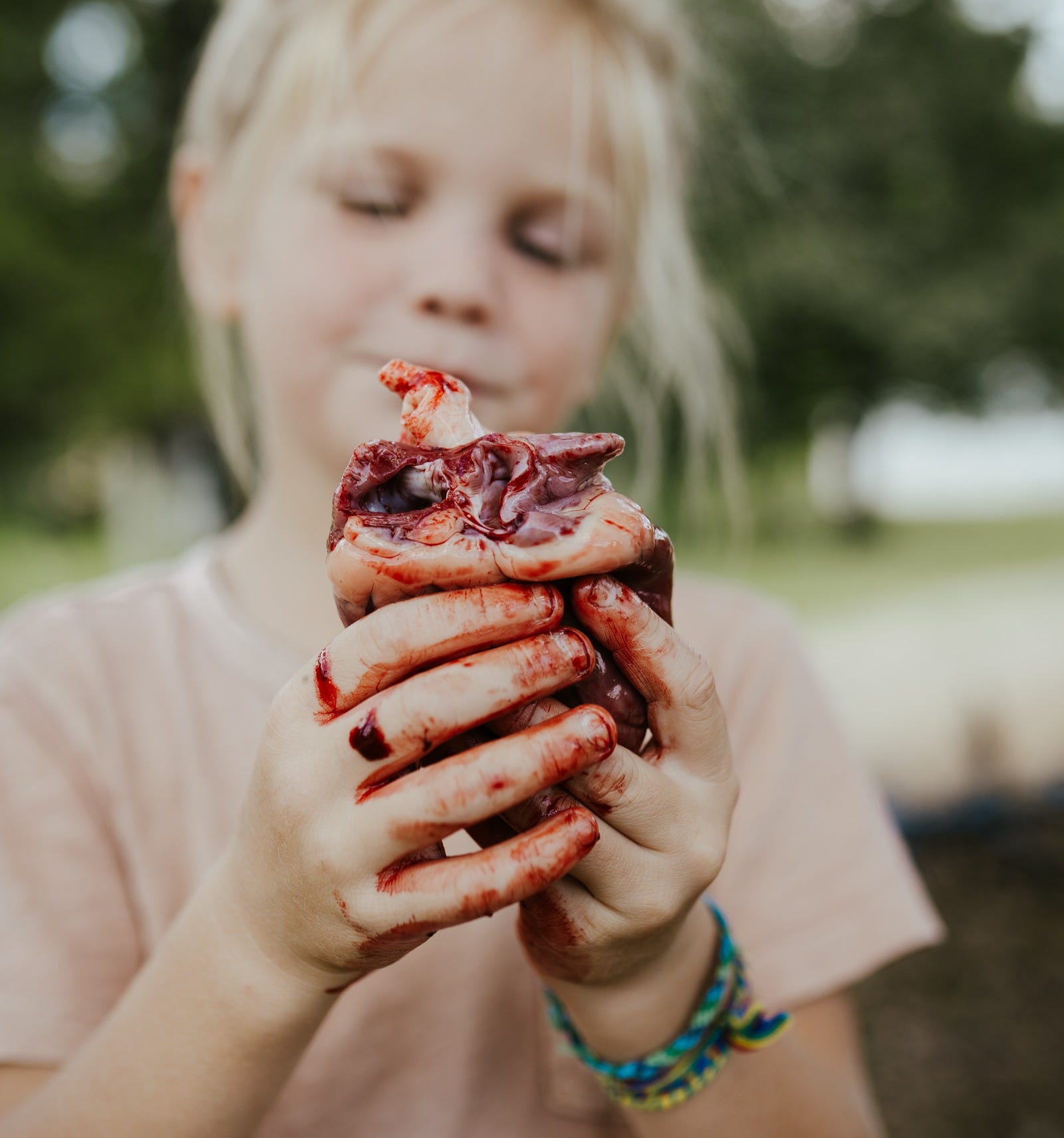
Only a people cultured in the leaky vat of husbandry, this agrarian bucket, may be domesticated and only a people consuming artificially inseminated life may articulate an artificial intelligence. Let us not be confused here, for we have no time for it—exploit is abuse when gifts go un-given. It is settler-colonial culture in fluid Lands...
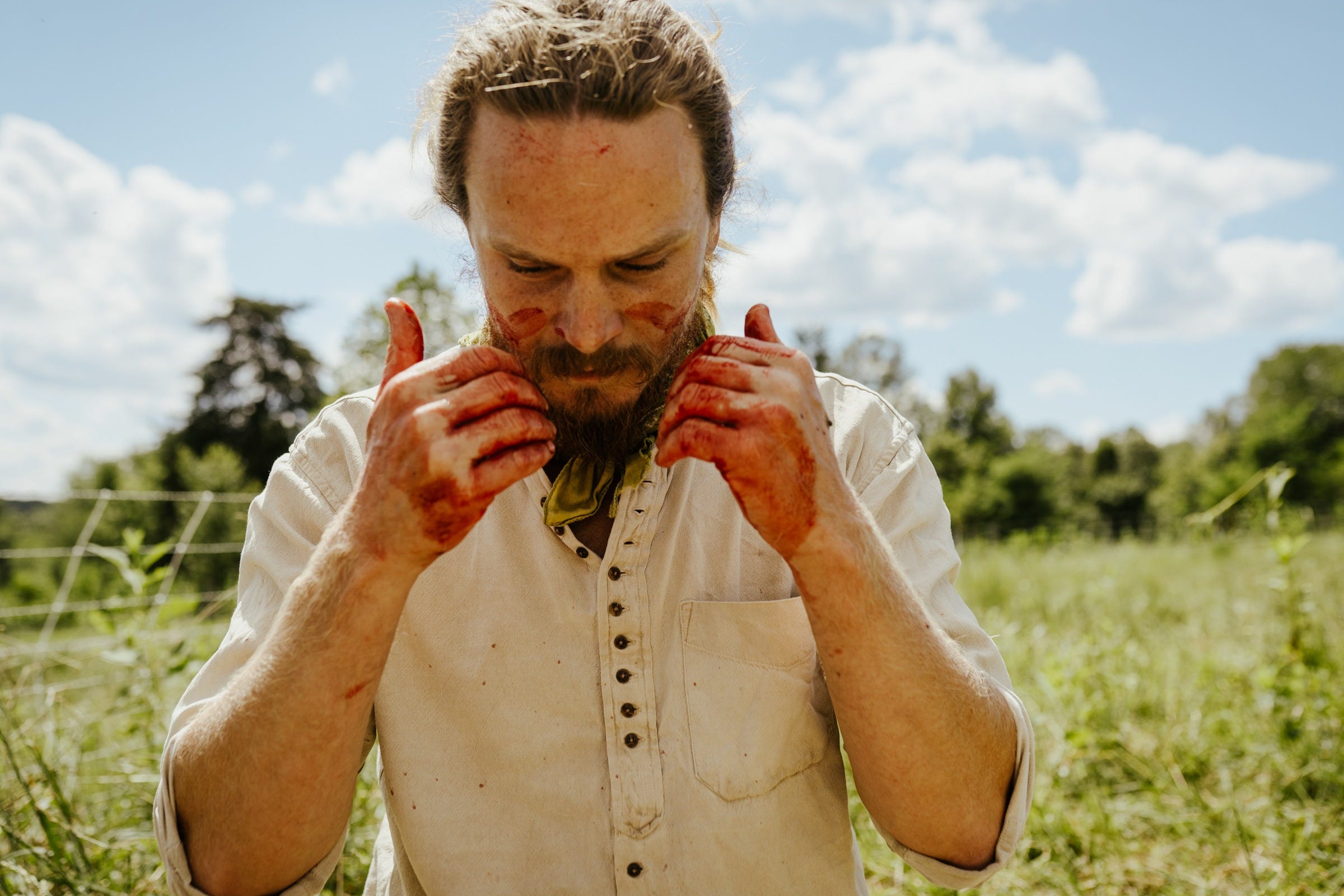
I think exploit is life’s brocaded fabric. Call it kinship if you may, or sacrificial friendship, call it honor too, but I wonder if it’s all the better to be exploited by Earth Mother and her many lays of two and four—leggeds, the plant Peoples and passing winged-ones, than by envy, anger, ego, vanity, or by the unconquerable. There are many gifts in this world and choose we must how we give them and how we are given.
To be conquerable is to be the best of things: alive, living, fluid and rooted like blood. To conquer is to be already dead, a wraith of mortal men playing with immortality.
All of that is to say: nothing is worth the Earthling’s soul of love, and so to give it is the greatest gift of all. Value, worth, has nothing and everything to do with it. To heed a world of dreamed images splayed like carrion before crows, the blood-beaked battle goddess, ennâkâ, is to hold the present moment for all that it contains. This is my present and lasting concern. Life is give-away-gift, like entropy, it dies forever when it fails to walk in the chaos of rebirth.
The more I feel the warmth of gifts, of exploit, the more jealous of myself I become. This is the beautiful irony. The more we turn in, the more we tuck tight in these skin wrapped bones, the more we are exposed
It is my lasting concern. And it is my eternal joy.
I crave my own time, all and all with its duration less esteemed than its peace and sombre isolation from the ringing and dinging and hum-thrumming all around. I seek my own needs. I yearn to be myself unconditionally, though I know I am best when bathed, overwhelmed, and bothered by the gift of exploitation.
I possess myself so I may be possessable. This is the birth of infinite being, but sometimes it takes forceps.
Slán go fóill!
P.S. There is a confused and strange social connection, one that bares little etymological texture, between the word exploit and slavery, racism, injustice, colonialism, etc. “Exploit” from the Proto Celtic galarom, meaning “illness” or “sorrow,” a word rooted in the Proto Indo European *ǵʰelH-ro-, which itself may mean something like “unpleasant.” While “an unpleasant sorrow” may feel, at times, similar to slavery, racism, injustice, or colonialism (etc.), it is best to remember that simile is not equality, that a thesaurus is never the authority on cultural diction.
If you enjoy this, please share it by forwarding this email, sharing it on your social media (if you still have one), or sharing it on Substack.
Monthly subscriptions are $6.75. Yearly subscriptions are $49, and Founding subscriptions are $140. These subscriptions support my writing and this space. It may be a cup of coffee for you, but it is the nourishment that keeps up alive, and we are so very thankful!
Read Doireann Ní Ghríofa’s A Ghost in The Throat to understand this inspiration and plagiarism.
Cold Weather: Ougros — There is something that is cold, like ice, and there is something that feels cold, like ice. There is the physical, and there is the feeling. Some highlight owgro as a potential PC word to express the idea, being simply “cold,” but there are also ɸreswos, meaning “frost” which creates the modern Irish words reo meaning “frost” or reomhar meaning “frigid,” among many other variations. The same PC root is bundled in Welsh (Cymraeg) as rhew, meaning “hoar-frost” or rhewedig meaning “icy” or “extremely cold.” All of this braid is culturally constructed or extended from the PIE *prews-, meaning “to freeze, frost.” Modern English recieves the word frost from this PIE root. There are other option, though, that are not as much physcial structures (like ice or frost) as they are felt. Yegis is one, a PC word meaning “ice” that stems the Irish word oighear or oighreach, meaning “glacial ice,” or something to that regard. This is more felt than understood because glacial ice is only a distant memory for the most of us and so, culturally, this falls more in the heart’s direction, than the nervous system’s. The PIE root *h₃ewǵ-, meaning “cold” constructs the essence that I feel is best to represent the heart-feeling of “coldness.” Ougros, meaning “cold” is the word I have chosen here. It extends well across the ancient world (even in the Lithuanian word aušti) as the Irish fuar, meaning “cold, apathetic,” or the Scottish Gaelic fuarachd, meaning “coldness,” or even the Manx feayr or feayght, meaning “cold, exposure,” or the Welsh (Cymraeg) oer or oeraf, meaning “cold, dejected” or “to become cold, depressed.” Ougros contains the essence of coldness while also the feelings or effects of that coldness.
Mother Tongue. Proto Celtic, meaning “lineage (ancestral web weaving your life and place).” A similar word is used in the Indigenous culture of the Māori. “Whakapapa” is the core of traditional mātauranga Māori.”
Mother Tongue. Proto Celtic, meaning “funeral poem.”
Mother Tongue. Proto Celtic, “Truth moves red in our bones.”
Read The Federalist #1 by ol’ boy Ham.
Another beautiful gift. You have a way with words. Thank you.